

Authors List
Browse our collection of authors
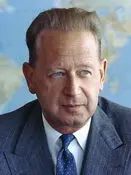
Dag Hammarskjöld

1905-07-29 – 1961-09-18
Dag Hammarskjöld was a Swedish diplomat and economist who served as the second Secretary-General of the United Nations from 1953 to 1961. He is widely regarded as one of the most influential diplomats of the 20th century and played a key role in resolving several international crises during the Cold War.
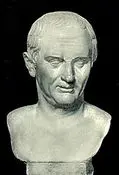
Cícero

0106-01-03 – 0043-12-07
Marcus Tullius Cicero was a prominent Roman statesman, lawyer, orator, and philosopher. Considered one of the greatest Latin orators and writers, Cicero played a crucial role in the transition from the Roman Republic to the Empire. His philosophical works, speeches, and letters offer an invaluable glimpse into the political and intellectual life of ancient Rome.
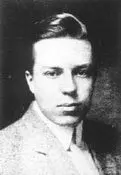
Christopher Morley

1890-05-05 – 1957-03-28
Christopher Darlington Morley (5 May 1890 – 28 March 1957) was an American journalist, novelist, poet and critic. He is perhaps best known for creating the game of Clue (Cluedo).
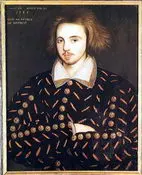
Christopher Marlowe

1564-02-06 – 1593-05-30
Christopher Marlowe (baptised 26 February 1564 – 30 May 1593) was an English playwright, poet and translator of the Elizabethan era. Marlowe is the foremost of the short-lived generation of playwrights who were Shakespeare's contemporaries. He was the greatest tragedian of his day and, along with William Shakespeare, was one of the few English playwrights of the period to gain a reputation for both great dramatic skill and literary merit.
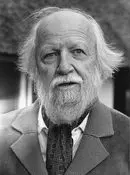
William Golding
1911-09-19 – 1993-06-19
Sir William Golding (1911-1993) was an English novelist, winner of the Nobel Prize in Literature in 1983. His most famous work is "Lord of the Flies" (1954), a dystopian novel that explores the nature of evil and the fragility of civilization. Golding wrote other novels that frequently deal with themes of morality, human nature, and the confrontation between order and chaos, often with historical or mythological settings.
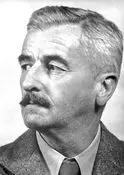
William Faulkner
1897-09-25 – 1962-07-06
William Faulkner (1897-1962) was an American novelist and short-story writer, awarded the Nobel Prize in Literature in 1949. He is widely recognized for his works that explore the complex history and society of the American South, often set in his fictional Yoknapatawpha County. His writing is known for its stylistic complexity, including the use of stream of consciousness, multiple perspectives, and non-linear timelines.
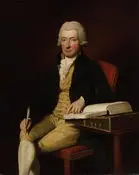
William Cowper
1731-11-26 – 1800-04-25
William Cowper (1731-1800) was an English poet and hymn writer. He is remembered for his lyrical and reflective poetry, which often addresses themes of nature, faith, and domestic life. His most famous work includes "The Task", a long narrative poem, and "Olney Hymns", a collection of religious hymns. Cowper struggled with mental health issues throughout his life, which also profoundly influenced his poetry, bringing characteristic introspection and melancholy.
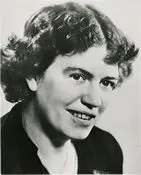
Margaret Mead
1901-12-16 – 1978-11-15
Margaret Mead was an American cultural anthropologist known for her research on tribal societies in Oceania and her advocacy for understanding cultural differences. Her publications had a significant impact on public discourse surrounding sexuality, family, and social change. Her pioneering work, though sometimes controversial, paved the way for future anthropological research and highlighted the importance of culture in shaping human behavior. Mead was a prolific and influential communicator, using the media to share her findings with a wider audience.
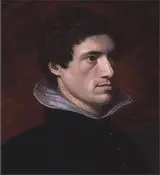
Charles Lamb
1775-02-10 – 1834-12-27
Charles Lamb was an English essayist, biographer, and writer. Born in London, he is best known for his work "Essays of Elia," which offers an intimate look into his life, observations, and feelings.
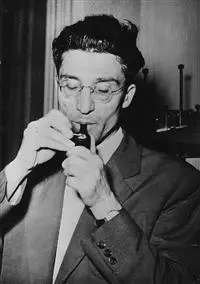
Cesare Pavese
1908-09-09 – 1950-08-27
Cesare Pavese was a prominent Italian writer, poet, translator, and literary critic. His work, deeply marked by the experience of war, solitude, and the search for identity, explores themes such as lost childhood, the return to the homeland, and the difficulty of communication. Recognized for his direct style and melancholic view of existence, Pavese left a significant literary legacy, influencing later generations of Italian writers. His tragically interrupted life reflects the intensity and contradictions of his profound artistic sensibility.
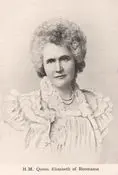
Isabel de Wied

1843-12-29 – 1916-02-18
Isabel de Wied was a princess of Wied, and later Queen of Romania. Born at Schloss Monrepos, she married Prince Carol I of Romania, becoming the royal consort in 1866. Isabel played a role in the cultural and social life of Romania, being known for her interest in arts and literature.
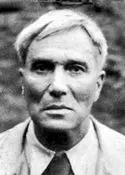
Boris Pasternak

1890-02-10 – 1960-05-30
Boris Pasternak was a highly acclaimed Russian poet, novelist, and translator, best known for his epic novel "Doctor Zhivago." His work often explores profound themes of love, nature, and the human condition, set against the backdrop of tumultuous historical events in Russia. Pasternak's lyrical and evocative poetry earned him international recognition, culminating in the Nobel Prize in Literature, though its acceptance led to significant personal and political turmoil. His literary contributions are marked by a deep engagement with Russian culture and a unique blend of modernist experimentation and traditional lyrical sensibility.
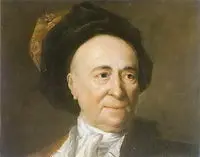
Bernard le Bovier de Fontenelle

1657-02-11 – 1757-01-09
Bernard le Bovier de Fontenelle was a French writer and philosopher, known for his clarity and popularization of science. He was one of the first to advocate the scientific method in his works and to apply reason to the study of nature. His work "Entretiens sur la pluralité des mondes" is a landmark in scientific dissemination, presenting accessible ideas about cosmology and astronomy.
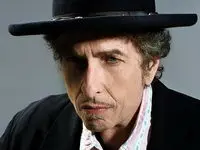
Bob Dylan
1941-05-24
Bob Dylan is an American singer, songwriter, multi-instrumentalist, and writer, widely regarded as one of the greatest figures in 20th and 21st century popular music. His work is known for its complex lyrical poetry, catchy melodies, and for addressing themes such as politics, love, existentialism, and social criticism.
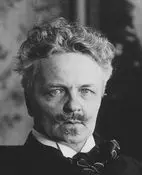
August Strindberg
1849-01-22 – 1912-05-14
Johan August Strindberg was a Swedish writer, playwright, and painter. He is considered one of the fathers of modern Swedish theater and a central figure in Swedish literature. His work is vast and ranges from novels and short stories to plays and essays, exploring themes such as class struggle, human psychology, and religion.

Antonio Porchia
1885-11-13 – 1968-11-09
Antonio Porchia was an Italo-Argentine poet known for his aphoristic and existentialist work. His writing is marked by conciseness, philosophical depth, and the exploration of themes such as life, death, time, and solitude. Although his literary production is scarce, his only book, 'El Libro de las Palabras', achieved a cult status and influenced several Spanish-language writers. His work stands out for its ability to condense complex reflections into short and impactful sentences, inviting the reader to a deep introspection about the human condition. The intensity and originality of his aphorisms have earned Porchia a unique place in 20th-century literature.
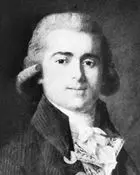
Antoine de Rivarol
1753-06-26 – 1801-04-11
Antoine Gombaud, Chevalier de Rivarol was a French writer and scholar, known for his wit and aphorisms. He was a prominent figure during the Age of Enlightenment, known for his critiques of the French Revolution.
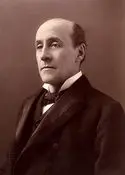
Anthony Hope
1863-02-09 – 1933-07-08
Sir Anthony Hope Hawkins, known as Anthony Hope, was a popular English novelist of the late 19th and early 20th centuries. He is best known for his adventure novels, particularly 'The Prisoner of Zenda' and its sequel 'Rupert of Hentzau', which helped define the 'Ruritanian romance' genre.
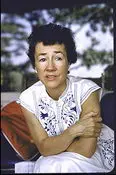
Anne Morrow Lindbergh
1906-06-22 – 2001-02-07
Anne Morrow Lindbergh was an American aviator and writer, wife and collaborator of aviation pioneer Charles Lindbergh. She played a significant role in the explorations and development of aviation in the 1920s and 1930s, participating in long-distance flights and assisting in mapping air routes. Her experiences as an aviator and her personal life, often in the public spotlight, inspired her writings.
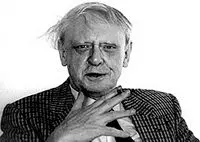
Anthony Burgess
1917-02-25 – 1993-11-22
Anthony Burgess was an English novelist, composer, and critic. He is best known for his 1962 dystopian novel, 'A Clockwork Orange', which explores themes of free will, free choice, and the nature of evil. Burgess wrote over 50 books, including novels, essays, criticisms, and works of non-fiction.
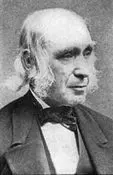
Amos Bronson Alcott
1799-11-29 – 1888-03-04
Amos Bronson Alcott was an American educational reformer, philosopher, and transcendentalist. He is best known for his pedagogical experiments, including the founding of the Temple School in Boston, where he sought to educate children holistically, emphasizing morality and spirituality. Despite his progressive ideals, his schools often faced financial difficulties and criticism.
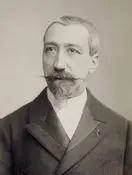
Anatole France
1844-04-16 – 1924-10-12
Anatole France was a renowned French writer and literary critic, known for his elegant, skeptical, and ironic style. His work often addressed philosophical and social themes, criticizing the hypocrisy and prejudices of his time with wit and humor. He was awarded the Nobel Prize in Literature in 1921, consolidating his status as one of France's most important literary figures.
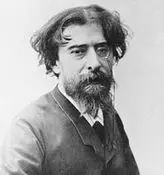
Alphonse Daudet
1840-05-13 – 1897-12-16
Alphonse Daudet was an acclaimed French novelist and short-story writer. His work is characterized by its realism, social observation, and vivid portrayals of Provençal and Parisian life. Daudet is known for his ability to capture the essence of his characters and settings.
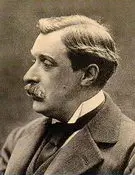
Alphonse Allais
1854-10-20 – 1905-10-28
Alphonse Allais was a French writer, journalist, and humorist. Known for his absurd humor, wordplay, and literary innovations, Allais was a prominent figure in the Parisian artistic and literary scene of the late 19th and early 20th centuries.