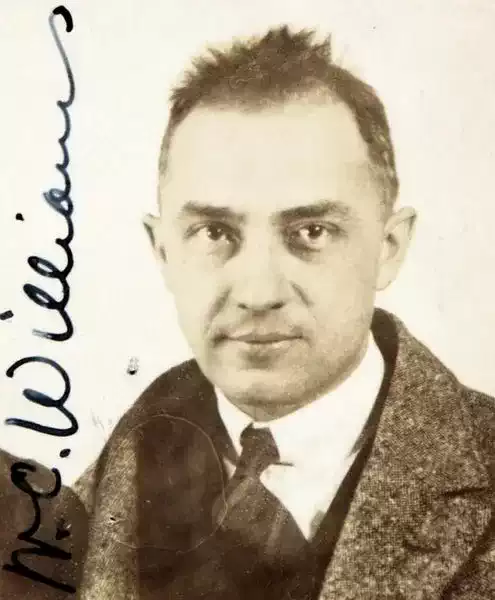
Identification and basic context
William Carlos Williams was an American poet, pediatrician, and writer. He was born in Rutherford, New Jersey, a place that would profoundly influence his work. Williams wrote primarily in English and was a key figure in the American Modernist movement. His life spanned periods of significant technological and social change in the United States, including the early days of automobiles, the World Wars, and the rise of mass media.
Childhood and education
Williams's childhood was marked by his dual heritage, with a white father from an English-speaking background and a mother of Puerto Rican descent. He spent his early years in Puerto Rico and then in New York City, where he attended public schools. He later studied at the University of Pennsylvania, where he met Ezra Pound and Hilda Doolittle (H.D.), who would become important literary figures. Williams pursued medical studies, eventually specializing in pediatrics, a profession that deeply informed his poetic vision by keeping him grounded in the realities of everyday life and human experience.
Literary trajectory
Williams's literary career began during his university years, where he became involved with the Imagist movement, though he later diverged from its more rigid tenets. His early collections of poetry, such as *The Tempers* (1913) and *Al Que Quiere!* (1917), began to establish his distinctive voice. He gained significant recognition for *Spring and All* (1923) and *The Great American Novel* (1920). His long poem *Paterson* (1946-1958) is considered his magnum opus, a sprawling, multi-part work that attempted to capture the essence of American life in the modern era. Throughout his life, he also wrote plays, essays, and a novel.
Works, style, and literary characteristics
Key works include *Spring and All*, *Paterson*, *Pictures from Brueghel and Other Poems*, and his autobiography, *Yes, Mrs. Williams*. Williams's dominant themes include the beauty and significance of the ordinary, the complexities of American identity, the relationship between art and life, and the specificities of the American landscape and language. His style is characterized by its use of colloquial American speech, its emphasis on clear, concrete imagery, and its rejection of traditional poetic forms. He advocated for "no ideas but in things," meaning poetry should arise directly from observed reality. His poetic voice is often direct, observant, and empathetic. Williams was a pioneer of free verse, developing his own "variable foot" measure, which sought to capture the natural rhythms of American speech. His innovations in form and language helped define a distinctly American poetic idiom.
Cultural and historical context
Williams was a contemporary of many key Modernist figures, including Ezra Pound, T.S. Eliot, and Marianne Moore. While he shared some Imagist principles with Pound and H.D., he often diverged from their more European-influenced aesthetics, championing a uniquely American voice. His career coincided with major historical events like World War I and II, the Great Depression, and the burgeoning civil rights movement, all of which, directly or indirectly, found their way into his observations of American life.
Personal life
Williams's life as a practicing pediatrician in his hometown of Rutherford, New Jersey, profoundly shaped his perspective. His family life, including his marriage to Flossie, and his relationships with his children, provided a grounding influence. His professional responsibilities often limited his ability to fully immerse himself in literary circles, but he maintained close friendships with many writers, including Pound, who acted as his early champion and correspondent. His commitment to his patients and his community was as central to his identity as his writing.
Recognition and reception
While Williams achieved a dedicated following among poets and critics during his lifetime, his broader recognition came later. He received critical acclaim for *Paterson* and was awarded the Pulitzer Prize for Poetry in 1963 for *Pictures from Brueghel and Other Poems*. His influence grew significantly in the post-war period, particularly with the rise of the Beat Generation poets, who saw him as a crucial precursor to their own experimental approaches to language and form.
Influences and legacy
Williams was influenced by the Imagists, Walt Whitman, and the everyday reality he encountered as a doctor. His legacy is immense; he is considered one of the most important American poets of the 20th century. His emphasis on American vernacular, concrete imagery, and the exploration of the local has had a profound impact on subsequent generations of poets, including the Beats, the Black Mountain poets, and many contemporary American writers. His championing of a poetry rooted in everyday experience continues to resonate.
Interpretation and critical analysis
Williams's poetry is often analyzed for its engagement with American identity, its representation of the working class and ordinary life, and its formal innovations. Critics explore the tension between his medical practice and his poetic practice, and how his observations of the human body and social conditions informed his verse. His commitment to the "local" as a source of universal truth is a recurring point of critical discussion.
Curiosities and lesser-known aspects
Williams's dual career as a poet and a pediatrician is perhaps his most striking characteristic. He often carried a notebook with him during his medical rounds, jotting down observations that would later find their way into his poems. His close correspondence with Ezra Pound was instrumental in his early career. He was known for his energetic and direct personality, much like his poetry.
Death and memory
William Carlos Williams died at his home in Rutherford, New Jersey. His death was a significant loss to American literature, but his work continued to be widely read, studied, and celebrated. His influence remains strong, and he is remembered as a poet who found profound beauty and meaning in the everyday world.