

Authors List
Browse our collection of authors
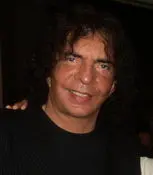
Alejandro Dolina

1944-05-20
Alejandro Dolina is a distinguished Argentine writer, musician, composer, and radio host, known for his unique style that blends humor, fantasy, and profound reflection on the human condition. His literary work, marked by a colloquial yet poetic and evocative language, has captivated audiences of diverse generations. With a prolific career spanning literature, music, and the media, Dolina has established himself as a cultural figure of great relevance in the Spanish-speaking world, offering a singular and endearing perspective on the world.

Avempace
1080 – 1138
Avempace, whose full name was Abu Bakr Yahya ibn al-Sa'igh ibn Bayyah, was a prominent Andalusian philosopher, theologian, and physician, recognized for his vast erudition and his profound influence on medieval Islamic thought. He was a polymath who addressed various branches of knowledge, from logic and metaphysics to ethics and medicine, leaving an intellectual legacy that transcended his time and geography. His work is characterized by an attempt to reconcile Aristotelian philosophy with Islamic theology, seeking to establish a harmonious synthesis between reason and revelation. Avempace is remembered for his contributions to logic, his theory of intellection, and his vision of the contemplative life as the pinnacle of human existence.
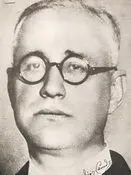
Enrique Díez Canedo
1879-01-07 – 1944-06-07
Enrique Díez Canedo was a prominent Spanish poet and literary critic, a key figure in the renewal of lyric poetry in the early 20th century. His work is characterized by a deep aesthetic sensibility, a masterful command of language, and a constant exploration of themes such as love, melancholy, and the transience of time. His work as a critic and introducer of avant-garde poetry in Spain was fundamental to the development of the literature of his time, leaving an important legacy in contemporary criticism and poetry.

Manuel González Prada
1844-01-05 – 1918-07-22
Manuel González Prada was a prominent Peruvian writer, essayist, and poet, a key figure of the Modernist literary movement in his country and a fervent social and political critic. His work is characterized by a deep reflection on Peruvian reality, the denunciation of injustice and colonialism, and a marked influence of Krausism and anarchism. Prada advocated for the modernization of Peru, educational reform, and the vindication of indigenous cultures. His poetry, often avant-garde and challenging, explores themes such as national identity, criticism of religion and established morality, and a pessimistic view of human destiny. He is considered one of the most influential intellectuals of republican Peru.

Rufino Blanco Fombona
1874-06-17 – 1944-10-16
Rufino Blanco Fombona was a prominent Venezuelan writer, essayist, and politician, a key figure of modernism and the Generation of '98 in Hispanic America. His work is characterized by a deep reflection on Latin American identity, criticism of imperialism, and the exaltation of Hispanic culture. He was an intellectual committed to his time, whose vibrant and passionate prose addressed themes such as history, politics, and literature with a penetrating and often polemical gaze. As a public figure, Blanco Fombona played an important role in Venezuelan diplomacy and politics, which allowed him to interact with various intellectual and political circles of the era. His legacy lies in his vigorous defense of Hispanicity and his tireless work for the preservation and dissemination of culture, as well as in his influential literary work that continues to be studied and debated.

Inés Arredondo
1928-03-20 – 1989-11-02
Inés Arredondo was a distinguished Mexican writer whose work is primarily inscribed in the genre of short stories and novellas. Her writing is characterized by a deep exploration of the human psyche, often tinged with gothic, fantastic, and psychological horror elements. Through precise and evocative language, Arredondo addressed themes such as loneliness, madness, social repression, and desire, creating dense and disturbing atmospheres. Her style, often considered ahead of its time, places her as a crucial figure in 20th-century Latin American literature. Her stories, although brief, possess an intensity and depth that invite multiple readings, exploring the darkest corners of existence and the human condition.

Rodolfo Enrique Fogwill
1941-07-15 – 2010-08-21
Rodolfo Enrique Fogwill was a prominent Argentine writer and literary critic, known for his provocative prose and his sharp observation of social and political reality. His work, which spans narrative and poetry, is characterized by direct, often raw language, and a deep irony that exposes the hypocrisies of his time. Fogwill explored themes such as marginality, violence, and the complexities of Argentine identity, leaving an indelible mark on his country's contemporary literature.

Guadalupe Pita Amor
1918-05-30 – 2000-05-08
Guadalupe Pita Amor, known as Pita Amor, was a Mexican poet who stood out for her eccentric personality and bohemian lifestyle. Her poetic work, marked by direct language, often provocative and charged with eroticism, explored themes such as love, desire, rebellion, and social criticism. Despite her self-taught background and unconventional style, she carved out her own place in 20th-century Mexican poetry, remembered for her vitality, independence, and unique lyrical voice.
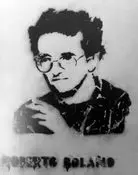
Roberto Bolaño
1953-04-28 – 2003-07-15
Roberto Bolaño was an influential Chilean writer, whose work, marked by a hypnotic prose and a deep darkness, explored the labyrinths of identity, memory, violence, and literature itself. His life, spent between Chile, Mexico, and Europe, was reflected in a narrative that often fused autobiographical elements with fiction and social criticism. Bolaño became a post-mortem cult figure, acclaimed for his stylistic audacity, his vast imagination, and his ability to capture the complexity of the contemporary world through unforgettable characters and absorbing plots.

Ventura Gassol
1893-10-06 – 1980-09-19
Ventura Gassol was a Spanish poet, doctor, and politician, a relevant figure in Catalan literature. His poetic work, deeply rooted in Catalan culture and tradition, is characterized by its lyricism, its connection with nature, and its commitment to the ideals of his land. He was an intellectual committed to his time and a defender of the Catalan language and culture.

César Dávila Andrade
1918-10-05 – 1967-05-02
César Dávila Andrade was an Ecuadorian poet whose work is characterized by deep introspection and an existential quest. His poetry explores themes such as solitude, death, time, and the human condition, often tinged with a melancholic and reflective tone. Despite a relatively scarce production, his poetic voice stands as one of the most original and powerful in 20th-century Latin American lyricism. His legacy lies in the intensity of his language and the universality of his questions about life and the universe.

Reynaldo Arenas
1944-08-16 – 1990
Reynaldo Arenas is a Cuban poet, narrator, and essayist whose work is characterized by a deep reflection on identity, memory, and the human condition within the context of Cuban and Latin American reality. His writing is distinguished by poetic language of great expressive force, often laden with symbolism and with sharp social criticism. Arenas is considered a relevant voice in contemporary literature, exploring the complexities of existence and the dilemmas of his time with a personal and universal outlook.
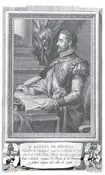
Alonso de Ercilla
1533-08-07 – 1594-11-29
Alonso de Ercilla y Zúñiga was a Spanish soldier and poet, author of "La Araucana", one of the most important epic poems in Spanish literature and the first major work of Chilean literature. His life was marked by his participation in the wars of conquest in America, especially in the Arauco War, where he fought against the Mapuche. His work is a direct testimony of these campaigns, combining historical chronicle with the exaltation of the bravery of the conquerors and, at the same time, showing respect for the courage of the indigenous people.

José María Fonollosa
1922-08-08 – 1991-10-07
José María Fonollosa, also known as Joan Maragall i Gorina, was a Spanish poet whose work is mainly framed within contemporary Catalan poetry. His writing is characterized by deep introspection, the exploration of the human condition, and reflection on time and memory. He often addressed universal themes through careful language and evocative imagery, establishing himself as a relevant voice in the lyric poetry of his time.

Jorge Eduardo Eielson
1924-04-13 – 2006-03-08
Jorge Eduardo Eielson was a Peruvian poet and artist, a key figure in the Latin American literary avant-garde. His poetic work is distinguished by profound formal and linguistic experimentation, exploring the materiality of language and its relationship with identity and memory. With a career spanning poetry, sculpture, and performance, Eielson was characterized by his constant search for new forms of expression. His poetry, often dense and enigmatic, delves into the depths of being, existence, and the human condition, leaving a legacy of originality and artistic boldness.

Germán Bleiberg
1915-03-14 – 1990-10-30
Germán Bleiberg was a Spanish poet and literary critic whose work is characterized by an intense exploration of the human condition, identity, and memory, often from an existential and reflective perspective. His poetry, marked by precise language and a deep capacity for introspection, addresses themes such as the passage of time, solitude, and the search for meaning. Bleiberg also stood out for his work as a critic, analyzing the work of other authors with acuity and rigor. His legacy rests on a poetic and essayistic body of work that invites meditation on fundamental aspects of life.

Joan Alcover
1854-05-03 – 1926-02-25
Joan Alcover i Maspons was a Spanish poet, essayist, and literary critic, a prominent figure of the Majorcan Renaissance and one of the greatest exponents of Catalan Modernism. His poetic work is characterized by lyrical depth, existential reflection, and meticulous aesthetic form, often exploring themes such as love, death, the land, and identity. He was an intellectual committed to Catalan culture and language, defending their vitality and literary projection. His essayistic prose and critical work were also fundamental to the dissemination and study of the literature of his time, consolidating his legacy as one of the great poets of contemporary Catalan literature.

Pedro Juan Gutiérrez
1950-01-27
Pedro Juan Gutiérrez is a contemporary Cuban writer, known for his raw and provocative style that often explores the darker aspects of life and sexuality. His work is characterized by direct and uncompromising prose, which has generated both admiration and controversy. Through his novels, short stories, and poetry, Gutiérrez has established himself as an important voice in current Latin American literature, offering an unflinching look at Cuban reality and the human condition.

Luis Franco
1898 – 1988
Luis Franco was an Argentine poet and doctor, whose work is characterized by a deep connection with the land, national identity, and reflection on the human condition, often tinged with a telluric and social spirit. His poetry, marked by direct and evocative language, explores the landscapes of his homeland, the struggles of man, and the search for transcendent meaning. Franco stands as a unique voice in Argentine poetry, combining lyricism with a strong commitment to reality.

Leonardo Castellani
1896-10-19 – 1981
Leonardo Castellani was an Argentine priest, writer, essayist, and poet, a prominent figure in 20th-century Catholic literature and thought. His work is characterized by profound erudition, an aphoristic style, and a critical view of contemporary reality and the human condition. He addressed theological, philosophical, literary, and social themes with a multifaceted and often provocative prose. His thought, rooted in Thomistic and Augustinian tradition, projected itself originally onto the problems of his time, offering a unique perspective that distinguished him within the Hispano-American intellectual landscape.

Almafuerte
1854 – 1917
Almafuerte, pseudonym of Pedro Bonifacio Palacios, was an Argentine poet known for his work filled with lyricism and patriotic fervor. His verses often explore themes such as love, homeland, religion, and social justice, with deep introspection and passionate language. He is considered an important figure in gaucho poetry and Argentine literary nationalism, leaving a legacy of poems that have resonated through generations for their expressive power and commitment to moral and spiritual values.

Antonio Arraíz
1903-03-27 – 1962-09-16
Antonio Arraíz was a prominent Venezuelan poet, essayist, and diplomat, recognized for his profound lyricism and his commitment to the social reality of his country. His work is characterized by an intense reflection on the human condition, homeland, and the search for identity. Throughout his career, Arraíz explored various poetic forms, merging tradition with experimentation, and left a significant legacy in Hispano-American literature. He was an influential figure in the intellectual and cultural circles of Venezuela, actively participating in public life through his diplomatic work.

Vicente Gerbasi
1913-06-02 – 1992-12-28
Vicente Gerbasi was a Venezuelan poet and diplomat, a key figure in 20th-century Venezuelan poetry. His work is characterized by a profound reflection on Venezuelan identity, history, nature, and time. He explored themes such as the social reality of his country, the search for roots, and the human condition, employing a powerful and often epic language. He was also a prominent essayist and cultural promoter, leaving a significant legacy in his country's literature.
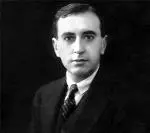
Vicente Huidobro
1893-01-10 – 1948-01-02
Chilean poet, a central figure of the 20th-century literary avant-garde. Huidobro was a bold innovator, creator of "creationism," a movement that proposed that the poet should create a new reality through words, independent of imitating the outside world. His work, vast and experimental, explored diverse forms and languages, notably influencing Latin American and universal poetry. He was a cultural agitator, editor, and promoter of the arts, leaving a legacy of creative boldness and aesthetic renewal.