

Authors List
Browse our collection of authors
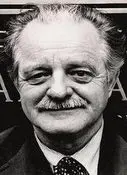
Kenneth Rexroth

1905-12-22 – 1982-06-06
Kenneth Rexroth was an influential American poet, essayist, and critic, a prominent figure in 20th-century American poetry, associated with movements such as Modernism and the Beat Generation. His work is characterized by a wide range of interests, from Eastern poetry and philosophy to radical politics and ecology. Rexroth was known for his scholarship, his accessible yet profound language, and his advocacy for poetry that was simultaneously beautiful and socially relevant, exploring themes such as nature, love, spirituality, and social criticism.

Zbigniew Herbert

1924-10-29 – 1998-07-28
Zbigniew Herbert was a Polish poet, essayist, and playwright, widely recognized as one of the most important European poets of the second half of the 20th century. His work is marked by a profound reflection on the human condition, history, morality, and classical culture, expressed in precise and rigorous language. He was a voice of integrity and intellectual resistance in times of oppression. Herbert is known for his ironic and often stoic perspective on the great themes of life, frequently using the figure of "Mr. Cogito" to explore the complexity of existence and the struggle for dignity.

Mira Schendel

1919-06-07 – 1988-07-24
Mira Schendel was a Swiss visual artist and poet, based in Brazil, known for her innovative and experimental approach to visual arts and literature. Her work, often associated with concretism and neoconcretism, explores the relationship between object, text, and space, questioning the boundaries of art and language. As a poet, Schendel stood out for her concise and conceptual writing, often integrated into her installations and visual works. Her poetry is characterized by abstraction, the exploration of the sign, and the dematerialization of the word, inviting the viewer-reader to a profound sensory and intellectual experience.
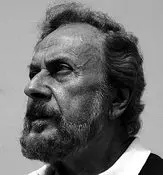
Yannis Ritsos

1909-05-01 – 1990-11-11
Yannis Ritsos was one of the most important Greek poets of the 20th century, known for his vast body of work and his political and social engagement. His poetry, deeply rooted in the Greek experience, addresses universal themes such as love, death, injustice, and human resistance. Considered one of the great names in modern poetry, Ritsos explored various poetic forms, from free verse to more elaborate structures, always with accessible language but loaded with symbolism and emotion.
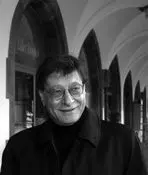
Mahmoud Darwish

1941-03-13 – 2008-08-09
Mahmoud Darwish was a widely celebrated Palestinian poet, considered the national poet of Palestine. His poetic work, deeply rooted in the experience of exile, land, and Palestinian identity, achieved international recognition. Darwish explored universal themes such as love, loss, memory, and the pursuit of freedom, using a rich and evocative language that captivated readers worldwide. His poetry became a powerful voice for the Palestinian cause, but transcended the political context to speak of the universal human condition.
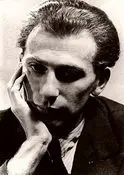
Miklós Radnóti

1909-05-05 – 1944-11-09
Miklós Radnóti was a Hungarian poet of Jewish origin, whose work, profoundly marked by the atrocities of the Holocaust, became a poignant testament to the human condition in times of barbarism. His poetry, often written in extreme circumstances, is characterized by lyrical strength, the struggle for dignity, and the incessant search for beauty amidst horror. Radnóti left a legacy of verses that echo the resilience of the human spirit, the importance of memory, and the universality of suffering and hope. His work is a landmark in 20th-century literature, serving as a grim and powerful reminder of the consequences of intolerance and war.
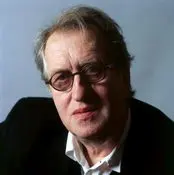
Gerrit Komrij

1944-03-30 – 2012-07-05
Gerrit Komrij was a renowned Dutch poet, writer, literary critic, and translator. His work spans a wide range of genres, including poetry, fiction, essays, and criticism. Known for his sharp intellect, caustic wit, and profound erudition, Komrij left an indelible mark on Dutch literature. He was a prominent figure in his country's cultural landscape, distinguished by his versatility and his ability to tackle complex themes with accessible and provocative language.
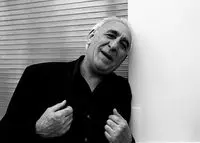
Raymond Federman

1928-05-15 – 2009-10-06
Raymond Federman was a French-born American novelist, poet, literary critic, and professor, known for his experimental writing and exploration of the boundaries of language and narrative. His work is marked by a deep interest in memory, identity, and the human condition, often with an autobiographical tone and a fragmented approach.
Pat Lowther

1935-07-29 – 1975-09-01
Pat Lowther was a Canadian poet known for exploring themes of feminism, motherhood, nature, and everyday life through direct and imagistic language. Her work is often marked by deep introspection and a particular sensitivity to human relationships and female experiences. Although her life was tragically cut short, Lowther's poetry continues to be celebrated for its emotional strength and its ability to capture the complexity of female existence in social and natural contexts.

Danfo Sine

Danfo Sine is an author whose literary works explore the complexities of contemporary life, often with a critical and reflective look at society and human relationships. His writing tends to be dense and introspective, inviting the reader to delve into universal themes. Danfo Sine's production, although still in the process of consolidation in terms of public recognition, demonstrates significant expressive potential. His poetry seeks a language that is simultaneously capable of capturing the nuances of contemporary feeling and thinking.

Isabel Câmara
1940-01-01 – 2006-01-01
Isabel Câmara was a Portuguese poet whose work is predominantly situated in the context of the 20th century. Her poetry is often characterized by an introspective and lyrical approach, exploring universal themes such as nature, time, memory, and the human condition. Her writing, though sometimes discreet in terms of public notoriety, reveals a refined sensibility and a mastery of poetic language.

Guillermo Fernández

1932-10-02 – 2012-03-31
Guillermo Fernández is a contemporary Spanish poet and professor, recognized for his poetic work that explores the depth of human experience with a style marked by reflection and sensitivity. His writing is characterized by careful language and the ability to evoke complex emotions and thoughts. As an academic, he has dedicated part of his career to the study and dissemination of literature.
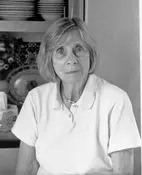
Barbara Guest
1920-09-06 – 2006-02-15
Barbara Guest was an American poet recognized for her contribution to modern poetry, particularly associated with the New York School. Her work explores the complexities of language, perception, and identity, often in an experimental and innovative manner. Guest challenged poetic conventions through her distinctive use of verse and her fragmented, interconnected approach to form. Throughout her career, she explored themes such as memory, nature, art, and the female condition, using precise and imagistic language. Her poetry is often characterized by its intelligence, subtle musicality, and profound reflection on the limits of representation and expression.
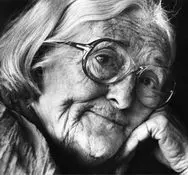
Meridel Le Sueur
1900-02-22 – 1996-11-14
Meridel Le Sueur was an American writer whose works addressed the struggles of the working class and women, especially during the Great Depression. Through powerful and often lyrical prose, she gave voice to the marginalized, exploring themes of social injustice, resistance, and the pursuit of dignity in times of adversity. Her writing is marked by a deep sense of empathy and a commitment to social justice, making her an important figure in American progressive literature.

Paul de Vree

1909-11-13 – 1982-04-25
Paul de Vree was a Belgian poet, visual artist, and performer, a prominent figure in experimental poetry and concrete poetry. His work, often associated with the Fluxus movement and sound poetry, explored the intersections between word, image, and sound, challenging traditional literary conventions. With a multidisciplinary approach, de Vree dedicated himself to creating visual poems, sound performances, and installations, using various techniques and materials to expand the boundaries of poetic expression. His artistic production reflects a avant-garde spirit and a commitment to experimentation, leaving a significant legacy in contemporary poetry and visual arts.
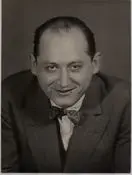
Benjamin Péret
1899-07-04 – 1959-09-18
Benjamin Péret was a French surrealist poet, known for his work that challenged conventions and explored the irrational, the dreamlike, and the erotic with transgressive freedom. His poetry is marked by an exuberant imagination, black humor, and fierce criticism of social and religious institutions. Péret was a central figure in the surrealist movement, actively participating in its demonstrations and publications, leaving a legacy of verses that celebrate revolt, love, and the beauty of the absurd.
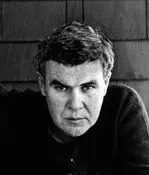
Raymond Carver
1938-05-25 – 1988-08-02
Raymond Carver was an American writer known for his concise and realistic prose, often focusing on the lives of the working class and their challenges. His work, characterized by economy of language and psychological depth, portrays characters in moments of crisis and transition, exploring loneliness, disillusionment, and the search for meaning in an apparently mundane world. Carver is considered a prominent figure in literary minimalism.
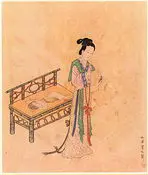
Xue Tao

0768-01-01 – 0831-01-01
Xue Tao was a celebrated Chinese poet of the Tang Dynasty, known for her beauty, talent, and independent spirit. Her poetry, often evocative and melancholic, explored themes of love, the passage of time, and the ephemeral beauty of life, reflecting her own experiences and insights. Xue Tao stood out in a male-dominated era, earning recognition for her sharp intellect and the lyrical quality of her compositions, becoming an iconic figure in Chinese literary history.
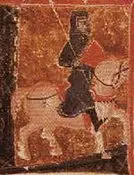
Bertran de Born
1140 – 1215
Bertran de Born was an Occitan troubadour of the 12th century, known for his poetry and political activity. His work reflects the complexity of feudal relations and the vibrancy of courtly culture in Provence.
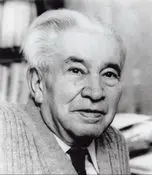
Jaroslav Seifert

1901-09-23 – 1986-01-10
Jaroslav Seifert was a prominent Czech poet, writer, and journalist, awarded the Nobel Prize in Literature in 1984. His work is recognized for its lyricism, humanism, and its ability to capture the essence of Czech life and culture, often in times of great political adversity. Seifert navigated the complexities of the 20th century, expressing love for his homeland, its traditions, and its ordinary people, in poetry that became a symbol of cultural resistance and hope. With a style that combined the everyday with the sublime, and the personal with the universal, Seifert left a lasting legacy as one of the most important European poets, whose voice resonates through its authenticity and its deep connection to national identity.
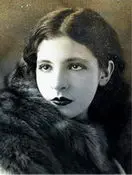
Patrícia Galvão

1910-06-09 – 1962-12-12
Patrícia Galvão, also known by the pseudonym "Pagu", was a multifaceted figure of Brazilian modernism, excelling as a writer, journalist, playwright, and political activist. Her literary work, marked by boldness and social criticism, reflects the cultural effervescence and transformations of her time. Pagu is remembered as a pioneering intellectual, whose life and artistic production challenged conventions and paved the way for new forms of expression and female action in the public sphere.
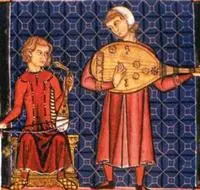
Meendinho
Meendinho, whose name is lost in the mists of time, is an enigmatic figure of medieval Galician-Portuguese poetry. Recognized for a single cantiga de amigo, "Mendiño, se miña/a mia dona veo", he embodies the saudade, the absence, and the depth of amorous feelings expressed in contexts of separation. His work, though scarce, possesses a remarkable lyrical strength, revealing a refined sensitivity for expressing the pain of distance and the hope for reunion. Meendinho is a testament to the richness and expressiveness of the troubadour poetry of the Iberian Peninsula.
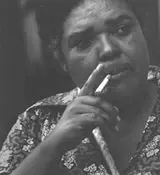
Bessie Head

1937-07-06 – 1986-04-17
Bessie Head was a Motswana writer of South African origin, known for her works that deeply explore identity, exile, the female condition, and the social and political complexities of Southern Africa. Through engaging narrative and memorable characters, Head portrayed the struggles and resilience of marginalized individuals, especially women, in societies marked by colonialism, apartheid, and the search for a place in the world. Her writing, often autobiographical in tone and inspiration, is characterized by brutal honesty, genuine compassion, and profound reflection on human nature. Bessie Head left a significant literary legacy, becoming an essential voice in African literature and an inspiration for generations of writers who address the same universal themes.

Jalāl ad-Dīn Muḥammad Balkhī, Rūmī

1207-09-30 – 1273-12-17
Jalāl ad-Dīn Muḥammad Balkhī, more commonly known as Rumi, was a 13th-century Persian poet, jurist, theologian, and Islamic mystic. Born in the region of Greater Khorasan, he migrated with his family to escape the Mongol invasion, eventually settling in Konya, in the Sultanate of Rum, from which he derives his honorific name. His work, deeply spiritual and mystical, is central to the Sufi tradition, exploring divine love, union with the Absolute, and the journey of the soul. Rumi is celebrated worldwide for his lyrical poetry, particularly the "Masnavi," a six-volume allegorical epic, and the "Divan-e Shams-e Tabrizi," a vast collection of lyrical poems and ruba'iyat. His legacy transcends cultural and religious boundaries, being considered one of the most influential and beloved poets in history.