

Authors List
Browse our collection of authors

Miron Białoszewski

1922-06-30 – 1983-06-17
Miron Białoszewski was a Polish poet, writer, playwright, and actor, considered one of the most important figures in post-war Polish literature. He was one of the most original representatives of the so-called "new lyricism" and the "poetic prose movement," characterized by innovative language, a colloquial tone, and the exploration of everyday life. His work, often autobiographical and fragmented, addresses themes such as memory, identity, sexuality, and life in Warsaw during and after World War II.
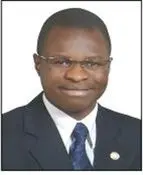
Jean-Baptiste Tati Loutard

1938-12-15 – 2009-07-04
Jean-Baptiste Tati Loutard was a Congolese poet and politician, whose literary work is a vibrant testament to African identity and the complexity of the post-colonial experience. His poetry, written in French, explores themes such as homeland, ancestry, the struggle for freedom, and the search for a place in the modern world. With a language rich in imagery and symbols, Tati Loutard evokes the beauty and resilience of African culture, while reflecting on the challenges of identity and modernization. His writing is a link between oral tradition and contemporary literary expression.
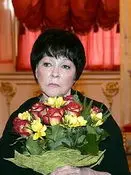
Bella Akhmadúlina

1937-04-10 – 2010-11-29
Bella Akhmadulina was a prominent Russian poet, known for her refined lyricism and emotional expressiveness. Her poetic work is marked by formal beauty, the exploration of universal themes such as love, memory, and the passage of time, and a deep aesthetic sensibility. Akhmadulina emerged as an important voice in 20th-century Russian poetry, captivating readers with her elaborate language and her ability to evoke vivid imagery and profound feelings. Her legacy endures as a testament to the power of poetry in expressing the complexities of the human experience.
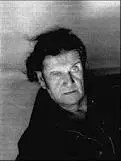
Edgar Bayley

1919-01-01 – 1990-01-01
Edgar Bayley was an Argentine poet and literary critic, a prominent figure in his country's literary avant-garde. His work, marked by strong linguistic experimentation and the exploration of existential and social themes, reflects an engagement with the transformations of the 20th century. Bayley is remembered for his relentless pursuit of new forms of poetic expression, in a trajectory that established him as one of the important names in contemporary Argentine poetry.
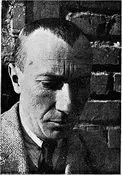
Hans Arp

1886-09-16 – 1966-06-07
Hans Arp, also known as Jean Arp, was a Franco-German visual artist and poet, a prominent figure in the 20th-century avant-garde movements. His artistic work, characterized by organic and biomorphic forms, often abstract and playful, extended to poetry, where he explored language experimentally, breaking with semantic and syntactic conventions. A key collaborator of Dadaism and co-founder of Surrealism, Arp sought to liberate art and poetry from rational and bourgeois constraints. His poetry, often composed of word and sound collages, reflects a quest for spontaneity, the unconscious, and pure creative energy, leaving a lasting legacy in Surrealist art and literature.

Paulo Colina

1950-03-09 – 1999-10-09
Paulo Colina is a contemporary poet whose work is distinguished by the exploration of existential themes and formal experimentation. His writing navigates between lyricism and reflection, addressing the human condition with a careful and imagistic language. With an approach that dialogues with the poetic tradition, but without neglecting the innovations of modern writing, Colina constructs a literary universe that invites introspection and contemplation of life and its complexities.
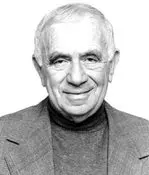
Yehuda Amichai

1924-05-03 – 2000-09-22
Yehuda Amichai was one of the most important Hebrew-language poets of the 20th century. His work is marked by a deep reflection on the human condition, exploring themes such as love, death, memory, and religion with a language that is both accessible and rich in symbolism. Amichai fused the sacred and the profane, the personal and the universal, creating poetry that resonates with modern experience and the search for meaning in a constantly changing world.
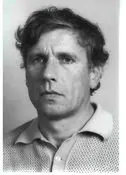
Gerard Reve

1923-12-14 – 2006-04-08
Gerard Reve was a prominent Dutch writer, known for his innovative and often controversial literary work. His writing is marked by a unique style, combining the everyday with the spiritual and the grotesque, exploring themes such as loneliness, love, death, and the search for meaning in a changing society. Reve is considered a central figure in post-war Dutch literature, whose work continues to provoke and inspire readers.
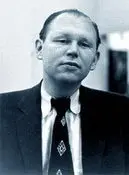
Jack Spicer

1925-01-30 – 1965-08-17
Jack Spicer was an American poet, a prominent figure in the San Francisco poetry scene of the 1950s. His work, often marked by a colloquial tone but laden with existential intensity, explores themes such as love, death, language, and the very nature of poetry. With an approach that defied formal conventions, Spicer is recognized for his authenticity and his ability to create poems that resonate with disconcerting rawness and honesty. His poetry is seen as a reflection of a constant search for meaning in an uncertain world. Jack Spicer's life, marked by hardship and a certain nomadism, seems to have influenced his writing, imbuing it with a unique urgency and vulnerability. He is remembered as a poet who intensely lived his art, leaving a legacy of works that continue to challenge and inspire readers and poets.
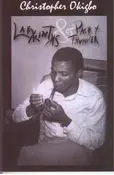
Christopher Okigbo

1930-08-16 – 1967
Christopher Okigbo was a Nigerian poet, considered one of the most prominent figures in modern African English-language poetry. His work is marked by a deep lyrical sensibility, rich and imagistic language, and an exploration of themes such as African identity, the sacred, war, and the human condition. His influences are diverse, encompassing African oral traditions, classical and modern Western poetry, and a strong spirituality. Okigbo is remembered for his expressive force and his tragic death in combat during the Nigerian Civil War, which lent his work an aura of sacrifice and prophecy. His poetry continues to resonate for its formal beauty and its existential and political relevance.
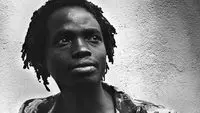
Dambudzo Marechera

1952-06-04 – 1987-08-18
Dambudzo Marechera was a Zimbabwean poet, short story writer, and novelist, known for his innovative and challenging writing. His work explores themes of identity, colonialism, alienation, and the human condition in a post-colonial context. Emerging as a prominent voice in African literature, Marechera addressed the complexity of the Zimbabwean experience with intense and often surreal language, distinguishing himself through his originality and lasting impact, despite a relatively short literary career.
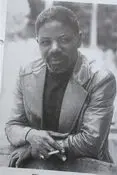
Tchicaya U Tam'si
1931-08-25 – 1988-04-22
Constantin Mutombo Mukenge, better known as Tchicaya U Tam'si, was a Congolese poet, novelist, and playwright. His work, written in French, is marked by a profound exploration of African identity, the post-colonial condition, spirituality, and the complexities of the relationship between man and the cosmos. Tchicaya U Tam'si is considered one of the greatest African poets of French expression, whose voice resonates with strength and originality.
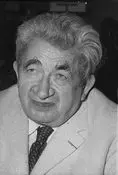
Jean Follain
1903-08-29 – 1971-03-10
Jean Follain was a French poet, novelist, and journalist, whose work is recognized for its lyrical quality and exploration of daily life and the rural landscape. With a precise style and keen attention to detail, Follain captured the essence of small things, giving them a deep poetic dimension. His poetry is an invitation to contemplate simplicity, nature, and human relationships, seen through a sensitive and sometimes melancholic gaze. Follain's work is distinguished by its lyrical objectivity, avoiding grand emotional outbursts in favor of meticulous and suggestive description. His poems and novels often portray country life, traditions, the occupations of peasants, and the passage of time, always with formal elegance and intrinsic musicality.
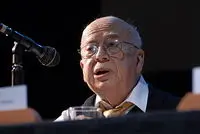
Gonzalo Rojas

1917-12-20 – 2011-04-25
Gonzalo Rojas was a Chilean poet recognized for his intense and innovative work. His poetry is marked by a deep reflection on the human condition, exploring themes such as love, death, time, and identity with a powerful and imagistic language. He is considered one of the most important voices in 20th-century Latin American poetry, with a unique style that bridges existentialism and visceral sensuality.
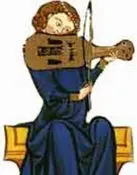
Raimbaut de Vaqueiras
1155-01-01 – 1207-09-04
Raimbaut de Vaqueiras was a Provençal troubadour of the Middle Ages, known for his mastery of courtly poetry and his participation in crusades. His work is notable for its metrical complexity and exploration of themes such as courtly love, war, and honor, reflecting the social and military environment of his time. He is considered one of the most important poets of the Galician-Portuguese and Occitan lyric.
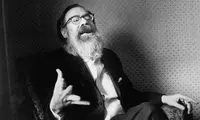
John Berryman
1914-10-25 – 1972-01-07
John Berryman was a renowned American poet, known for his lyrical intensity and exploration of themes such as pain, identity, madness, and mortality. His most celebrated work, "The Dream Songs," is a monumental piece that earned him the Pulitzer Prize and the National Book Award, establishing him as one of the most important voices in 20th-century American poetry. Berryman struggled with mental health issues throughout his life, and this personal anguish often shines through in his poetry, giving it a brutal honesty and remarkable emotional depth.
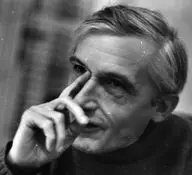
János Pilinszky

1921-11-27 – 1981-05-27
János Pilinszky was a Hungarian poet whose work is profoundly marked by the experience of World War II and the Holocaust. His poetry is characterized by an austere, concise, and sometimes brutal language, which seeks to confront the horror of existence with an incessant search for meaning and redemption. Pilinszky is known for his unique lyrical voice, which combines the rawness of reality with spiritual transcendence, exploring themes such as guilt, suffering, faith, and the need for compassion in a fragmented world. His work is considered one of the pillars of 20th-century Hungarian poetry.
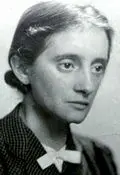
Christine Lavant

1915-07-04 – 1973-06-07
Christine Lavant was an Austrian poet whose work is distinguished by its lyrical intensity and raw exploration of human fragility, suffering, and the search for transcendence. Marked by a life of hardship and isolation, her poetry emerged as a powerful cry against pain, but also as a testament to the resilience of the spirit and the search for meaning amidst adversity. Her writing, often associated with existentialism and deep spirituality, captivates with its brutal honesty and the painful beauty of its imagery. Lavant addressed themes such as loneliness, death, faith, and despair with a unique voice, establishing herself as one of the most significant figures in 20th-century Austrian poetry, whose work continues to resonate for its universality and emotional power.

Leónidas Lamborghini
1927-01-10 – 2009-11-13
Leónidas Lamborghini was an Argentine poet, a prominent figure in his country's literary avant-garde. His work is marked by a transgressive, experimental, and irreverent language that challenges social and literary conventions. He explored themes such as national identity, politics, the body, and sexuality, often with a provocative and critical tone.
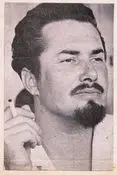
Sebastião Alba
1940-03-11 – 2000-10-14
Sebastião Alba was an Azorean poet and professor, known for his work marked by a strong connection to his homeland, island identity, and the human condition. His poetry, often melancholic and reflective, explores themes such as solitude, memory, the passage of time, and the search for meaning in an often adverse universe. With a refined style and a language that evokes the landscape and soul of the archipelago, Alba established himself as a unique voice in contemporary Portuguese poetry.
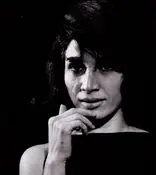
Forough Farrokhzad

1935-01-05 – 1967-02-13
Forough Farrokhzad was an Iranian poet, filmmaker, and intellectual, considered one of the most influential voices in modern Persian poetry. Her work is characterized by boldness, exploration of the female condition, social criticism, and lyrical intensity. Through a personal and transgressive language, she addressed themes such as love, freedom, religion, and alienation, challenging the social and literary conventions of her time. Her short but impactful life and work left a lasting legacy in Iran's literature and cinema.
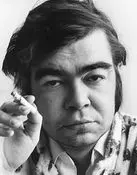
Pentti Saarikoski

1937-09-02 – 1983-08-24
Pentti Saarikoski was a Finnish poet and writer, a central figure in post-war Finnish poetry. His work is known for its lyrical intensity, its reflections on the human condition, society, and identity, and its formal experimentation. Saarikoski is considered one of Finland's most important poets, whose work continues to resonate for its honesty and depth.
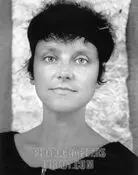
Aglaja Veteranyi

1962-05-17 – 2002-02-03
Aglaja Veteranyi was a Romanian writer, known for her works that explore identity, memory, and the human condition through intense and original language. Her writing is marked by deep sensitivity and a raw exploration of life experiences, often shifting between the real and the dreamlike. Veteranyi left a literary legacy that continues to resonate for its expressive power and the way she approaches universal themes with a unique perspective.
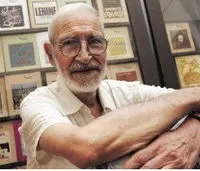
Vítor Silva Tavares
1937-07-17 – 2015-09-21
Vítor Silva Tavares is a Portuguese poet whose work is part of contemporary poetry. His writing is marked by a deep reflection on the human condition, the passage of time, and the search for meaning in a constantly changing world. He explores universal themes through a careful and imagistic language, dialoguing with poetic traditions while affirming a unique voice.