

Authors List
Browse our collection of authors
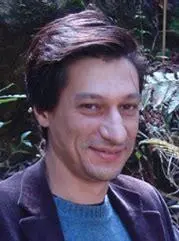
Manuel de Freitas

1972-01-01
Manuel de Freitas was a Portuguese poet known for his lyrical work and his deep connection with popular culture and oral tradition. His poetry is marked by accessible language, yet laden with symbolism, exploring themes such as memory, identity, and the passage of time. He stood out for his ability to capture the essence of daily life and Portuguese landscapes, giving them a universal and timeless dimension. His work reflects a keen sensibility and profound humanity.
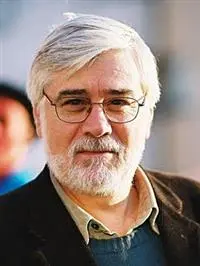
Jaime Rocha
1949-04-17
Jaime Rocha is a Portuguese poet whose work is distinguished by its strong connection to the land, to everyday life, and to a language that evokes orality and simplicity. His poetry, often anchored in rural landscapes and affective memories, addresses themes such as identity, the passage of time, nature, and human relationships with particular sensitivity. He is a voice that celebrates the concrete, the lived, with a sometimes melancholic, but always authentic and profoundly human tone.
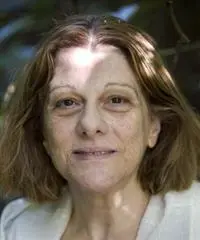
Hélia Correia
1949-01-01
Hélia Correia is a notable contemporary Portuguese writer, recognized for her poetic work and her prose of great depth and originality. Her writing is marked by a rich and elaborate language, by the exploration of universal themes such as memory, time, identity, and the female condition, and by a unique sensitivity to the subtleties of human experience. With a solid and multifaceted literary career, Hélia Correia has established herself as one of the most important voices in recent Portuguese literature, influencing generations of readers and writers.
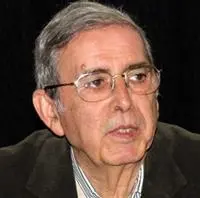
António Manuel Pires Cabral
1941-08-13
António Manuel Pires Cabral is a Portuguese poet, essayist, and researcher, whose work is distinguished by its reflection on identity, memory, and the human condition, often rooted in the landscape and culture of Alentejo. His poetry is marked by careful language, a sometimes melancholic tone, and a deep sensitivity to the small things in life and the passage of time. As an essayist and researcher, Pires Cabral has contributed to the study of Portuguese literature and culture, particularly in the field of poetry. His literary and academic work reveals a deep knowledge of literary tradition and a critical perspective on contemporary society.
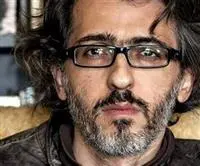
Luís Quintais
1968-08-19
Luís Quintais is a contemporary Portuguese poet and essayist, whose work is notable for its rigorous exploration of language and its reflection on the human condition and art. His poetry is marked by intellectual density and a peculiar musicality. With a consolidated literary career, Quintais moves between poetic creation and literary criticism, offering a sharp look at literature and culture. His work is recognized for its originality and the depth of its aesthetic and philosophical investigations.

Golgona Anghel

1979-01-01
Golgona Anghel was a vanguard poet, whose work was characterized by formal experimentation and the exploration of existential and social themes. His poetry reflects a critical view of reality, often imbued with irony and deep sensitivity. He was part of a literary movement that sought to break with established traditions, paving the way for new forms of poetic expression.
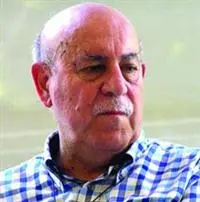
Armando Silva Carvalho
1938-03-28 – 2017-06-01
Armando Silva Carvalho was a Portuguese poet, essayist, and translator whose work is marked by a profound reflection on the human condition, memory, and the passage of time. His poetry, characterized by careful language and restrained lyricism, explores universal themes with unique sensitivity. A key figure in contemporary Portuguese literature, Silva Carvalho also stood out for his work as a translator, bringing important works of universal literature into Portuguese, and as an essayist, deepening his vision of art and life.
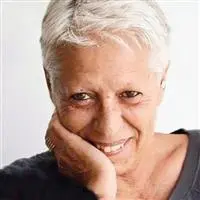
Isabel Mendes Ferreira
1954
Isabel Mendes Ferreira is a contemporary Portuguese poet whose work is distinguished by its lyrical depth and exploration of themes such as memory, identity, and the human relationship with the natural world. Her poetry, marked by careful language and strong visual sensibility, invites reflection on the human experience in its most diverse facets. With an authentic voice and an attentive eye on the subtleties of life, Mendes Ferreira establishes herself as a relevant figure in contemporary Portuguese poetry, offering sensitive and pertinent readings on contemporaneity.
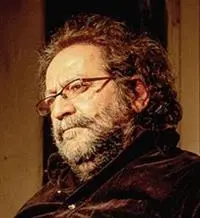
António Cabrita
1931-01-01 – 1990-03-12
António Cabrita is a contemporary Portuguese poet, known for his poetry that oscillates between intimate lyricism and reflection on the human condition and the surrounding world. His work stands out for its careful language and its ability to evoke poignant images and sensations. Cabrita has actively contributed to the Portuguese literary scene, with a production that has been recognized for its originality and depth.

Tatiana Faia
1986-06-30
Tatiana Faia is a Portuguese poet and writer whose work stands out for its exploration of the human condition, memory, and identity. Her poetry is marked by careful language and deep sensitivity, addressing universal themes with a contemporary perspective. With a writing that moves between the lyrical and the reflective, Tatiana Faia constructs a unique poetic universe, inviting the reader to delve into the complexities of emotions and inner landscapes. Her work has been gaining significant space in current Portuguese poetry.
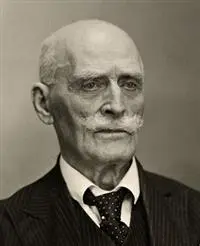
Knut Hamsun

1859-08-04 – 1952-02-19
Knut Hamsun was a prominent Norwegian writer, awarded the Nobel Prize in Literature in 1920, whose works explore the human psyche with unique intensity and innovative style. His writing is marked by the exploration of themes such as alienation, poverty, madness, and man's relationship with nature, often through tormented and marginal characters. Hamsun is recognized for significantly influencing literary modernism, especially through his stream-of-consciousness technique and his penetrating gaze into the complexities of existence. Despite his literary brilliance, his figure is also marked by controversies due to his sympathies for the Nazi regime, an aspect that raises complex debates about art and the artist.
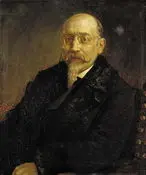
José Echegaray

1832-04-19 – 1916-09-14
José Echegaray y Eizaguirre was a prominent Spanish playwright, novelist, and politician, whose work earned him the Nobel Prize in Literature in 1904. Recognized for his contribution to Spanish theater, Echegaray explored moral and social themes with an intense and often dark dramatic style. His plays, marked by passionate conflicts and ethical dilemmas, reflect the concerns of Spanish society of his time, addressing honor, duty, justice, and the consequences of human actions. As a public and intellectual figure, Echegaray played a significant role in Spain's political and cultural life. His vast literary production, which includes both theater and prose, solidified his position as one of the most important authors of the late 19th and early 20th centuries in Spain, influencing later generations of writers and artists.
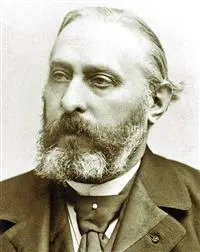
Sully Prudhomme

1839-03-16 – 1907-09-06
Sully Prudhomme was a French Parnassian poet, known for his poetry that explored philosophical, scientific, and psychological themes with a rigorous style and precise language. His works reflect a melancholic pessimism and a fascination with reason, science, and the human condition. He was the first poet to receive the Nobel Prize in Literature, in 1901, in recognition of his lyrical work which demonstrated a high artistic ideal, a profound humanity, and a rare combination of the qualities of a keen heart and mind.
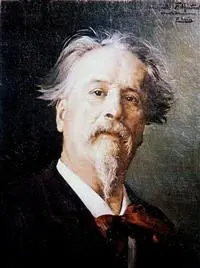
Frédéric Mistral
1830-09-08 – 1914-03-25
Frédéric Mistral was a French poet and lexicographer, a central figure of the Félibrige movement, which aimed at the revitalization and promotion of the Provençal language and culture. His poetic work, written in Provençal, celebrated the land, traditions, and way of life of southern France, gaining international recognition, including the Nobel Prize in Literature. Mistral dedicated his life to the defense of Occitan, compiling a monumental vocabulary and encouraging the use of the language in various spheres. His poetry is marked by a strong sense of regional identity, bucolic landscapes, and a deep love for his homeland, establishing him as one of the most important defenders of minority cultures and linguistic diversity.
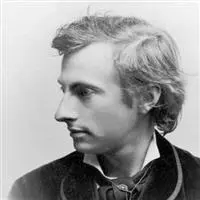
Karl Adolph Gjellerup

1857-06-02 – 1919-10-13
Karl Adolph Gjellerup was a Danish writer, awarded the Nobel Prize in Literature. His work, deeply influenced by Buddhism and Eastern philosophy, explores the search for spiritual truth and the connection between the individual and the cosmos. Gjellerup is recognized for his erudite prose and his reflections on the human condition, evolution, and the nature of reality. His literary journey began with naturalism, but evolved into a spirituality that led him to abandon Western conventions in search of a deeper understanding of the universe. His later work, written in German, reflects this transcendence and his admiration for Asian culture.
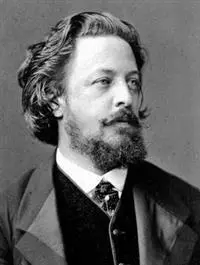
Paul von Heyse

1830-03-15 – 1914-04-02
Paul Heyse was a prominent German writer, known for his vast body of work in poetry, prose, and drama. He was a central figure in German literary life of the 19th and early 20th centuries, and was awarded the Nobel Prize in Literature in 1910. His writing covered a wide range of themes, often exploring human psychology and the complexities of social relationships. Heyse is remembered as a representative of the Munich School, associated with a certain academicism and refined aesthetics.
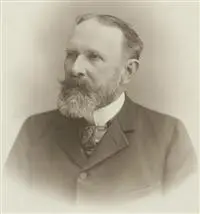
Carl Spitteler

1845-04-24 – 1924-12-29
Carl Spitteler was a prominent German-speaking Swiss poet, awarded the Nobel Prize in Literature in 1919. His work is vast and complex, characterized by a deep interest in mythology, philosophy, and the human condition, exploring universal themes in an epic and symbolic manner. With a grand and often allegorical style, Spitteler created poetic worlds rich in imagination and depth. His best-known works, such as "Der Chung"
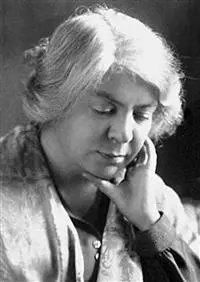
Grazia Deledda

1871-09-27 – 1936-08-15
Grazia Deledda was an Italian writer, awarded the Nobel Prize in Literature in 1926. Her work, deeply rooted in Sardinia, explores the human condition, moral conflicts, and the power of fate. Deledda masterfully portrayed her homeland, its customs, and the psychology of its inhabitants, often through characters marked by intense passions and ethical dilemmas. Through rich and evocative language, the author gave voice to the landscapes and soul of Sardinia, addressing universal themes such as love, sin, redemption, and fatality. Her style, realistic yet charged with symbolism, earned her international recognition and established her as one of the most important voices in 20th-century Italian literature.
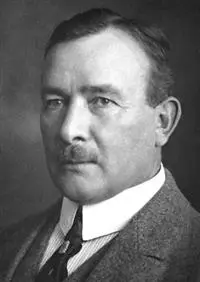
Erik Axel Karlfeldt

1864-07-20 – 1931-04-08
Erik Axel Karlfeldt was a Swedish poet, awarded the Nobel Prize in Literature. His work is deeply rooted in the landscape and rural life of Sweden, celebrating nature, work, and folk traditions with a rich and evocative language. His poems combine melancholic lyricism with subtle humor, exploring themes such as love, death, and the passage of time, always with a strong connection to Nordic culture and folklore.
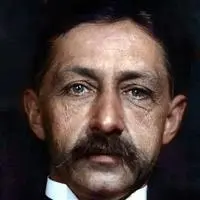
Ivan Bunin

1870-10-22 – 1953-11-08
Ivan Bunin was a Russian writer, Nobel laureate in Literature in 1933, being the first Russian writer to receive such an honor. His work, predominantly in prose, explores with melancholy and lyricism the landscapes of Russia and the dilemmas of the human soul, also having dedicated himself to poetry.
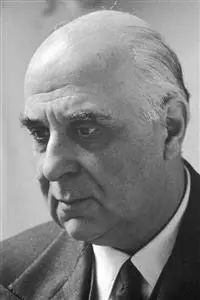
Giorgos Seferis

1900-03-13 – 1971-09-20
Giorgos Seferis was a prominent Greek poet and essayist, considered one of the central figures of 20th-century Greek literature and one of the greatest Greek-language poets. His work is marked by a deep reflection on Greek identity, history, memory, and the human condition, often set in the landscapes and myths of the Aegean. His poetry, though rooted in classical and Byzantine tradition, innovated by incorporating colloquial language and a modern existential approach, earning international recognition and a Nobel Prize in Literature.
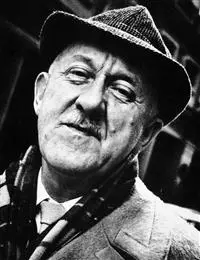
Halldór Laxness

1902-04-23 – 1998-02-08
Halldór Laxness was one of the most prominent Icelandic writers, awarded the Nobel Prize in Literature in 1955. His vast and diverse work encompasses novels, short stories, plays, poems, and essays, exploring Icelandic identity, the struggle for survival in a hostile environment, and social criticism with a rich and innovative language. He is recognized for his ability to blend realism with elements of Icelandic folklore and sagas. With a unique literary style, Laxness addressed themes such as poverty, social injustice, religion, and the search for existential meaning, leaving a literary legacy that continues to influence world literature and represent the soul and history of Iceland.
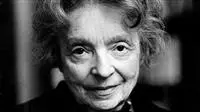
Nelly Sachs
1891-12-10 – 1970-05-12
Nelly Sachs was a German-language Jewish poet and playwright, awarded the Nobel Prize in Literature. Her work is deeply marked by the experience of the Holocaust and her life as a refugee. Her poetry, often described as a "song of mourning and hope," explores themes such as suffering, memory, diaspora, and the search for redemption. Through a lyrical and visionary style, Sachs gives voice to the victims of persecution, but also seeks a sense of transcendence and communion with the divine. Her writing is a poignant testament to the resilience of the human spirit in the face of barbarity.
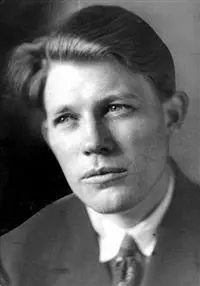
Harry Martinson
1904-05-06 – 1978-02-11
Harry Martinson was a Swedish poet, writer, and essayist, awarded the Nobel Prize in Literature in 1974. His work, deeply marked by nature and reflection on the human destiny and the cosmos, is characterized by a language rich in imagery and a profound ecological and existential sensibility. He explored themes such as man's relationship with the environment, the search for meaning in a constantly changing universe, and criticism of industrial and warfare society.